 905-470-7465
Key Differences Between Interactive Kiosks and Traditional Signage
Organizations use signage to share information, guide visitors and improve communication, but today's technology offers more options than traditional printed signs. As digital transformation continues across municipalities, recreation facilities, healthcare organizations, and public spaces, many decision-makers are evaluating interactive kiosks vs traditional signage to determine which solution best meets their communication goals.
Choosing the right solution depends on your organization's goals, visitor needs, and long-term communication strategy. Futuresign helps organizations across Ontario implement digital signage solutions that improve visitor experiences and operational efficiency while selecting technology that best fits their facilities.
How Traditional Signage and Interactive Kiosks Serve Different Purposes
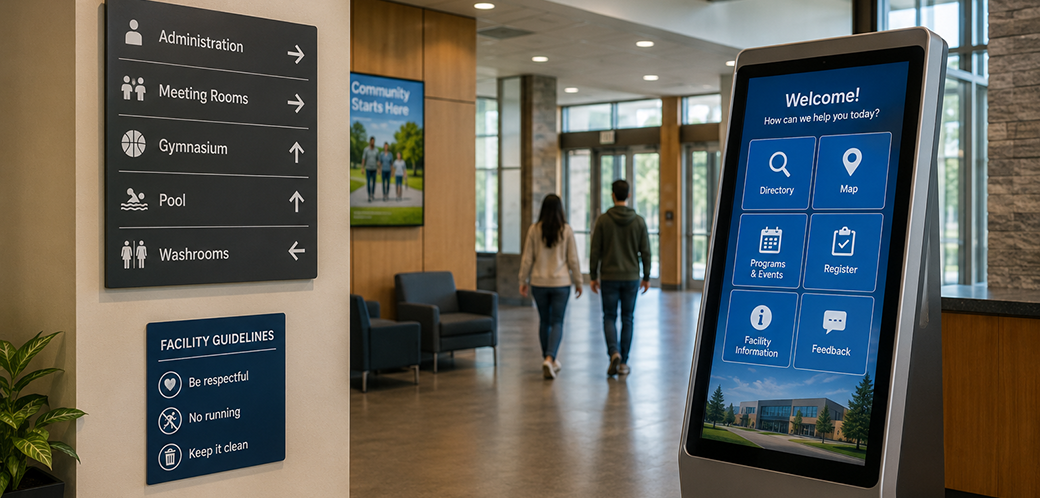
Although both help organizations communicate with visitors, they solve different communication challenges. The right solution depends on how information is delivered, how often it changes, and whether visitors need to interact with the content.
Traditional signage works best for one-way communication where information remains relatively static, while interactive kiosks encourage users to actively engage with digital content through touchscreens and self-service features.
| Traditional Signage | Interactive Kiosks |
|---|---|
| Displays fixed information | Supports two-way interaction |
| Requires physical replacement for updates | Content updates remotely in real time |
| Best for simple messaging | Best for personalized experiences |
| Lower initial investment | Higher functionality and flexibility |
| Passive viewing | Active user participation |
The best solution depends on how visitors interact with your facility and the type of information you want to deliver.
When Traditional Signage Is the Better Choice
Traditional signage remains an effective solution when information rarely changes and visitors only need clear, consistent visual guidance.
Traditional signs are commonly used for:
- Building identification
- Permanent room names
- Safety and regulatory signage
- Directional signs with fixed locations
- Exterior monument signs
Because traditional signage has lower upfront costs and requires minimal technology, it remains an effective solution for permanent communication. Custom signage and printing can support building identification, directional signage, and safety messaging.
When Interactive Kiosks Deliver Greater Value
Interactive kiosks are designed for environments where visitors need more than basic information. Instead of simply displaying content, they allow users to search, explore, and complete tasks independently.
Interactive kiosks can support:
- Digital wayfinding and interactive maps
- Visitor directories
- Self-service check-in
- Event and program registration
- Facility information and FAQs
- Community resources
- QR code integration
- Feedback surveys and customer data collection
Interactive kiosks also work alongside digital displays to support wayfinding, directories, event updates, FAQs, and visitor information, improving the visitor experience while reducing routine questions for staff.
Can Organizations Benefit From Using Both Solutions?
For many organizations, the best solution is not choosing one over the other. Traditional signage and interactive kiosks often work together to create a more effective communication strategy.
For example:
- Traditional signs guide visitors to entrances and key destinations.
- Interactive kiosks provide detailed wayfinding and facility information.
- Permanent safety signs remain visible at all times.
- Digital kiosks display real-time announcements and service updates.
- Static branding reinforces identity while interactive displays encourage engagement.
Combining interactive kiosks with professional signage and printing services helps organizations support both permanent wayfinding and real-time digital communication, creating a more convenient and connected visitor experience.
What Should You Consider Before Choosing Interactive Kiosks vs Traditional Signage?
The right solution depends on your organization's communication goals, visitor expectations, and operational needs. Understanding how people use your facility can help determine which technology delivers the greatest value.
Before making a decision, consider:
- How often does information need to be updated
- Whether visitors need self-service capabilities
- The level of interaction you want to encourage
- Available installation and maintenance budgets
- Opportunities for future expansion
- Integration with existing digital signage systems
Evaluating these factors helps organizations invest in communication tools that continue delivering value as technology and visitor expectations evolve.
When Interactive Kiosks May Be the Better Long-Term Investment
While both solutions continue to serve important roles, interactive kiosks provide a scalable communication platform that can evolve alongside organizational needs. Cloud-based content management, software integrations, and expandable functionality allow organizations to add new services and update information without replacing existing hardware.
Long-term benefits include:
- Better customer experience through interactive self-service
- Real-time content management across multiple locations
- Reduced printing and recurring replacement costs
- Valuable data analytics from user interactions
- Improved operational efficiency
- Flexible digital signage that grows with organizational needs
Organizations that need flexible, future-ready communication tools often find that interactive kiosks deliver greater long-term value by supporting evolving visitor expectations, digital services, and operational growth.
Explore Interactive Kiosk Solutions With Futuresign
Whether you're replacing static signage, improving visitor experiences, or planning a new interactive kiosk deployment, Futuresign can help you choose the right interactive kiosk solution for your organization.
Schedule a consultation today to discover how interactive kiosks can improve customer engagement, streamline communication, and create better experiences across your facility.
Frequently Asked Questions
Can interactive kiosks replace all traditional signage?
No. Permanent signs for safety, regulatory requirements, and building identification still play an important role. Many organizations achieve the best results by combining traditional signage with interactive kiosks.
Which organizations benefit most from interactive kiosks?
Municipal buildings, community centres, healthcare facilities, visitor information centres, educational institutions, and other public facilities commonly use interactive kiosks to improve visitor services and communication.
Can interactive kiosks be updated remotely?
Yes. Most interactive kiosks use cloud-based content management systems that allow organizations to update information, promotions, directories, and announcements remotely.
Do interactive kiosks collect user data?
Many interactive kiosks can track anonymous usage data such as screen interactions, popular searches, dwell time, and user engagement, helping organizations improve content and visitor experiences.
Are interactive kiosks difficult to maintain?
Modern interactive kiosks are designed for long-term reliability. Regular software updates, remote monitoring, and routine maintenance help keep systems operating efficiently while minimizing downtime.