 905-470-7465
Why Waiting Rooms Are Evolving
The waiting room is often a patient's first impression of a healthcare facility. Beyond providing a place to sit, modern waiting rooms are becoming an important part of the overall patient experience by supporting communication, comfort, and access to information before an appointment begins.
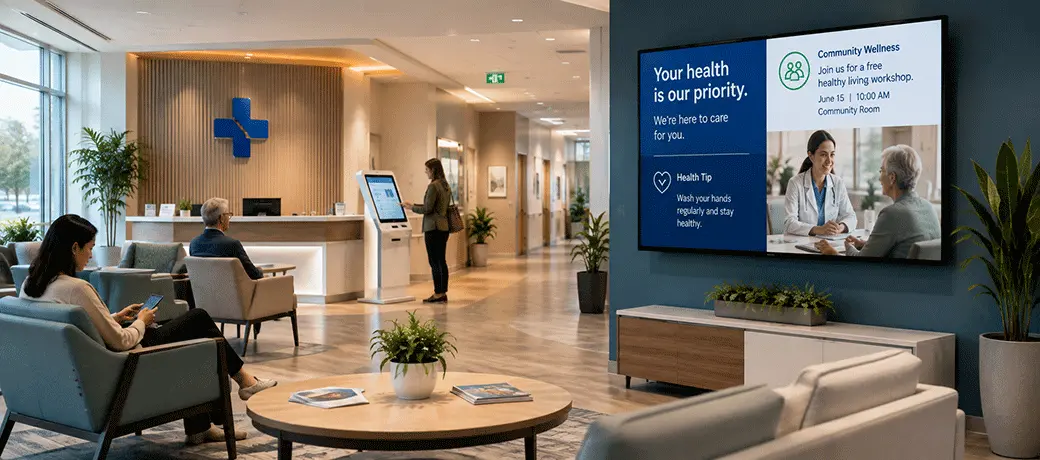
Healthcare organizations can use modern waiting room technology to create more connected healthcare environments. Digital signage, virtual waiting room processes, self-service tools, and patient education displays can support clearer communication while making waiting spaces more informative and welcoming.
What Is Driving Modern Waiting Room Technology?
As digital services become part of everyday life, convenient access to information, mobile communication, and self-service tools can help make healthcare visits easier for patients to navigate.
Several factors are influencing modern waiting room technology trends in healthcare, including:
- Growing demand for digital-first experiences
- Greater focus on patient communication
- Increased use of self-service technology
- The need to educate patients while they wait
- Support for infection control practices
- Improved accessibility for diverse patient needs
- More welcoming waiting spaces
- An enhanced overall waiting room experience
Rather than serving as passive spaces, waiting rooms are becoming connected environments that support patients throughout their healthcare journey.
Digital Signage Is Transforming Waiting Rooms
Digital signage provides healthcare facilities with a flexible way to communicate timely information. Instead of relying solely on printed posters or bulletin boards, healthcare providers can use centrally managed digital displays to keep patients and visitors informed.
Healthcare digital signage can communicate:
Patient Information
- Appointment reminders
- Estimated wait times
- Visitor information
Health Education
- Wellness tips
- Health education
- Community announcements
Facility Updates
- Department updates
- Emergency notices
- Safety information
Because content can be updated remotely, healthcare organizations can keep information current across multiple waiting areas while providing patients with useful information throughout their visit.
Traditional Waiting Rooms vs. Modern Waiting Rooms
Waiting rooms have evolved from passive spaces with limited information into connected environments that support communication, patient education, and engagement. The comparison below highlights how modern waiting room technology differs from more traditional approaches.
| Traditional Waiting Room | Modern Waiting Room |
|---|---|
| Printed brochures | Digital educational content |
| Static bulletin boards | Dynamic digital signage |
| Manual information updates | Centralized content management |
| Limited communication | Real-time announcements |
| Paper directories | Interactive digital information |
| Passive waiting | Connected patient engagement |
Modern waiting room technology helps healthcare organizations deliver timely information, improve patient education, and create a more engaging experience while keeping content current across the facility.
Virtual Waiting Rooms Continue to Grow
Virtual waiting room technology is changing how patients begin their healthcare visits. Instead of remaining in a crowded waiting room, patients may be able to remotely check in, receive appointment updates, and wait in another location until they are notified that it is time to enter the facility.
A virtual waiting room process may include:
- Mobile appointment check-in
- Digital registration forms
- Text message notifications
- Appointment status updates
- Secure communication before arrival
- Contactless arrival instructions
Virtual waiting rooms are one example of the broader digital technologies shaping healthcare experiences. These systems can work alongside in-facility communication tools such as digital signage and interactive displays to help create a more connected experience before and during a patient's visit.
How Digital Tools Support Better Patient Communication
Modern waiting room technology extends beyond digital displays. Healthcare facilities are combining multiple digital tools to help patients access information more easily throughout their visit.
Common technologies include:
- Interactive touchscreen kiosks
- QR codes linking to patient resources
- Mobile-friendly visitor information
- Digital wayfinding
- Self-service information stations
- Electronic forms and patient resources
- Contactless information access
Together, these technologies help healthcare providers communicate important information while allowing patients to access resources independently when appropriate.
Patient Education Is Becoming Part of the Waiting Experience
Waiting time presents an opportunity to educate patients using engaging digital content. Rather than relying only on printed reading materials, healthcare organizations are using digital signage to share information that supports health literacy and patient engagement.
Healthcare facilities commonly display:
- Preventive care information
- Wellness tips
- Nutrition guidance
- Seasonal health campaigns
- Vaccination reminders
- Community health initiatives
- Information about available healthcare services
- Public health announcements
Digital signage can help healthcare organizations provide useful educational information before appointments, making the waiting experience more informative while supporting patient education and health awareness.
Waiting Room Design Still Matters
Technology is only one part of creating a positive waiting room experience. The physical environment also plays a pivotal role in helping patients feel comfortable from the moment they arrive. A thoughtfully designed waiting area can support communication while creating a welcoming atmosphere for patients, families, and visitors.
Modern healthcare waiting rooms often include:
- Comfortable seating for different patient needs
- Natural light where possible
- Accessible layouts for wheelchairs and mobility devices
- Charging stations for mobile devices
- Family-friendly waiting spaces
- Quiet areas for greater privacy
- Clear directional signage
- Digital displays positioned for easy viewing
Together with digital communication tools, thoughtful waiting room design creates welcoming spaces that are easier to navigate and support a positive visitor experience.
Technology That Supports Patient Flow
Helping patients move smoothly through a healthcare facility begins before they see a healthcare provider. Modern waiting room technology gives patients better visibility into the check-in process while helping healthcare organizations communicate important updates throughout the visit.
Healthcare facilities may use digital technology to communicate:
- Estimated wait times
- Queue updates
- Appointment status
- Registration guidance
- Department information
- Visitor instructions
- Wayfinding information
- Service announcements
Providing timely updates helps patients understand what to expect during their visit. Keeping visitors informed throughout the waiting process can also help reduce uncertainty while creating a more transparent waiting room experience.
Accessibility and Inclusive Design Continue to Shape Waiting Rooms
Healthcare waiting rooms serve people of different ages, abilities, languages, and healthcare needs. Modern waiting room technology and design increasingly reflect the importance of creating inclusive environments that are easy for everyone to navigate.
Features that support accessibility include:
- Digital displays with clear typography
- Multilingual communication
- Touchscreen interfaces
- Wide wheelchair pathways
- Seating at different heights
- High-contrast visual content
- Clear directional signage
- Self-service kiosks
By combining accessible technology with inclusive healthcare design, organizations can create waiting spaces that support a broader range of patient needs while making information easier to access.
Emerging Waiting Room Technology Trends
Healthcare organizations continue to explore new technologies that improve communication before, during, and after a patient's visit. While every healthcare facility has different priorities, many modern waiting room technology trends focus on creating connected, patient-centred experiences.
Emerging trends include:
- AI-assisted patient communication
- Smart digital signage
- Personalized digital content
- Touchless information access
- Mobile-first patient communication
- Interactive wayfinding
- QR code integration
- Enhanced accessibility features
As healthcare technology continues to evolve, waiting room experiences may become more connected, personalized, and accessible. For healthcare organizations, the opportunity is to select communication technologies that align with their facility, patient needs, operational requirements, and communication goals.
Modernize Your Healthcare Waiting Room With Futuresign
Whether you're upgrading a medical office, planning a new healthcare facility, or modernizing an existing waiting room, Futuresign can help you create a communication solution that supports both patients and staff.
We design, install, and support digital signage solutions for hospitals, clinics, medical offices, and other healthcare organizations across Ontario. From digital waiting room displays and interactive kiosks to systems for sharing patient education and visitor information, we help healthcare providers implement solutions tailored to their facility and communication goals.
Contact Futuresign today to learn how modern waiting room technology can help create a more connected, informative, and welcoming experience for your patients and visitors.
Frequently Asked Questions
What is a virtual waiting room?
A virtual waiting room allows patients to check in remotely, receive appointment updates, and wait in another location until they are notified that it is time to enter the healthcare facility. The exact process varies depending on the healthcare provider and the technology being used.
Can modern waiting room technology be introduced gradually?
Yes. Modern waiting room technology can be introduced gradually, starting with digital signage or a single self-service kiosk and expanding to additional communication tools as the facility's needs evolve.
What information can digital signage display in a waiting room?
Healthcare digital signage can display appointment reminders, educational content, estimated wait times, visitor information, wellness campaigns, department announcements, and other public-facing information managed through a centralized content platform.
How does modern waiting room technology support accessibility?
Modern waiting room technology can include multilingual communication, accessible touchscreen interfaces, high-contrast displays, clear typography, and digital content designed to support visitors with a wide range of accessibility needs.
Is modern waiting room technology suitable for smaller healthcare facilities?
Yes. Digital signage, interactive kiosks, and other communication tools can be scaled for hospitals, medical offices, community health centres, and specialty clinics. Healthcare organizations can start with a single solution and expand as their communication needs grow.