 905-470-7465
Why Interactive Technology Trends Matter for Public Facilities
Public facilities are rapidly adopting new technologies to improve visitor experiences, increase operational efficiency, and deliver more responsive public services. From municipal buildings and libraries to recreation centres, government buildings, and transportation hubs, organizations are embracing interactive technology trends for public facilities that support digital signage, interactive kiosks, digital wayfinding, and other emerging technologies.
Adopting the right technology requires more than simply following emerging trends. Futuresign helps local governments and public sector organizations across Ontario implement interactive solutions that improve communication, enhance accessibility, and support long-term operational goals.
Why More Public Facilities Are Using Digital Wayfinding
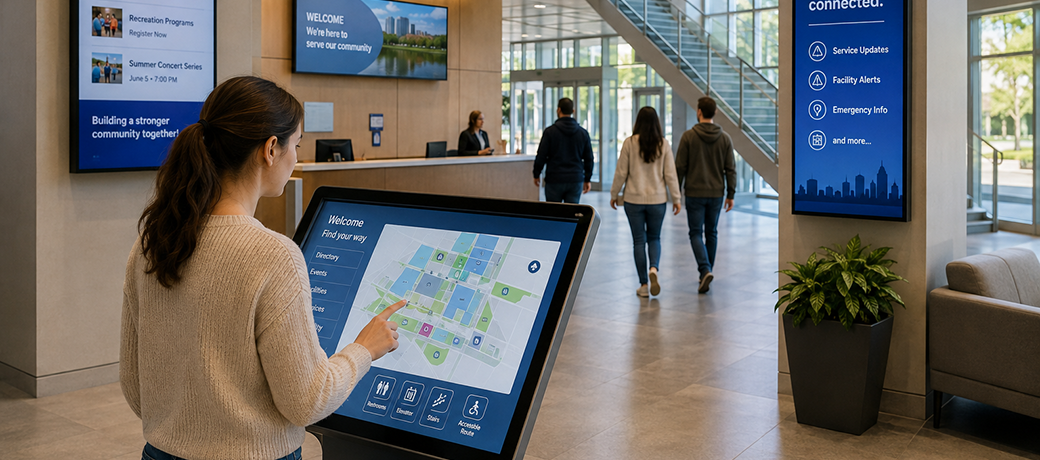
Visitors increasingly expect more than static maps and printed directories. Digital wayfinding systems combine interactive displays, digital maps, mobile integration, and real-time information to help visitors navigate complex spaces more efficiently while reducing confusion inside public facilities.
Modern digital wayfinding solutions can provide:
- Interactive maps
- Building directories
- Accessible routes
- QR codes for mobile devices
- Event schedules
- Emergency alerts
- Real-time facility updates
- Nearby points of interest
By replacing static signage with digital wayfinding signage, organizations improve visitor experiences, support facilities management, and provide accurate information that can be updated instantly across multiple locations.
How Artificial Intelligence Is Improving Public Services
Artificial intelligence is changing how public facilities deliver information and services. AI-powered interactive kiosks, virtual assistants, and predictive analytics help organizations understand visitor behavior while providing faster access to public services through familiar digital tools.
Artificial intelligence can support:
- Intelligent information kiosks
- Multilingual virtual assistants
- Personalized visitor recommendations
- Predictive analytics
- Automated customer support
- Real-time information delivery
- Visitor behavior analysis
- Data-driven service improvements
As AI technology continues to evolve, public facilities can deliver faster, more personalized services while using visitor insights and operational data to continuously improve the overall experience.
How Smart Buildings Improve Operations With Real-Time Data
Many public facilities are combining Internet of Things (IoT) integration, digital signage, and real-time data to improve facilities management and operational efficiency. Connected sensors allow organizations to monitor how buildings are used, optimize energy consumption, improve public safety, and better understand visitor traffic throughout the day.
Smart building technologies can monitor:
- Facility occupancy
- Energy consumption
- Indoor environmental conditions
- Equipment performance
- Space utilization
- Visitor traffic patterns
These insights help facility managers optimize operations, improve public safety, support sustainability initiatives, and enhance overall building performance.
Enhancing Accessibility Through Interactive Technology
Public facilities serve people with different abilities, languages, and levels of digital experience. Interactive technology helps make public services more accessible by providing multiple ways for visitors to find information and navigate facilities independently.
Accessibility features may include:
- Multilingual interfaces
- Voice-assisted navigation
- High-contrast display settings
- Large, easy-to-read text
- Touch-friendly controls
- Accessible digital wayfinding routes
Designing with accessibility in mind helps organizations create more inclusive public spaces while improving the experience for every visitor.
Supporting Better Community Engagement
Interactive technology helps public facilities create stronger connections with the communities they serve. Digital displays, self-service kiosks, and interactive communication tools make it easier for visitors to access services, stay informed, and participate in local initiatives.
Interactive technologies can support:
- Community announcements
- Public meeting information
- Upcoming events
- Visitor feedback
- Local programs and services
- Emergency communications
Providing timely, interactive information encourages greater participation while strengthening public trust through better communication between local governments and community members.
How Public Facilities Can Prepare for Future Technology
Technology continues to evolve, making flexibility an important consideration when public facilities plan long-term technology investments. Choosing scalable solutions allows organizations to adopt new capabilities without replacing their entire communication infrastructure.
Before implementing new technology, organizations should consider:
- Integration with existing systems
- Future expansion opportunities
- Staff training requirements
- Cybersecurity and data protection
- Ongoing technical support
- Long-term maintenance needs
A well-planned strategy helps public facilities maximize the value of interactive technology while preparing for future innovation.
Why Interactive Technology Supports the Future of Public Facilities
Interactive technology is becoming the foundation of modern public facilities. Scalable platforms, connected systems, and centralized content management allow organizations to adapt to changing visitor expectations, expand services, and adopt new technologies without replacing their existing infrastructure.
Long-term benefits include:
- Better visitor experiences through interactive technology
- Improved operational efficiency across departments
- Greater accessibility and equal access to public services
- More informed decisions using real-time data
- Reduced printing through digital signage
- Improved sustainability initiatives
- Scalable infrastructure for future technology adoption
By investing in flexible, future-ready interactive technology, public facilities can build a digital infrastructure that supports continuous innovation, improves public service delivery, and evolves alongside the communities they serve.
Modernize Public Facilities With Futuresign
Whether you're implementing digital wayfinding, interactive kiosks, or other smart communication technologies, Futuresign can help you create solutions that improve visitor experiences and support long-term operational goals.
Schedule a consultation to discover how interactive technology can modernize your public facility, improve operational efficiency, and create better experiences for your community.
Frequently Asked Questions
What types of interactive technology are commonly used in public facilities?
Public facilities commonly use digital signage, interactive kiosks, digital wayfinding systems, self-service kiosks, touchscreen directories, and AI-powered information tools to improve communication and visitor services.
How does interactive technology improve operational efficiency?
Interactive technology automates routine tasks, reduces repetitive inquiries, delivers real-time information, and helps staff focus on higher-value services while improving overall facility operations.
Can interactive technology improve accessibility?
Yes. Many solutions include multilingual support, voice assistance, accessible navigation, high-contrast displays, and touchscreen interfaces that make public services easier for more people to use.
Can interactive technology integrate with existing systems?
Yes. Many interactive solutions integrate with content management systems, visitor management platforms, scheduling software, building directories, and other existing technologies.
How can public facilities prepare for future technology upgrades?
Choosing scalable platforms, planning for system integration, providing staff training, and working with experienced technology partners help organizations expand their interactive technology over time without replacing their existing infrastructure.